Threads of India — Dr. Rajshree Verma Writes
Paithani: Tradition Woven in Colour — Episode 4
Episode 4 of Threads of India explores the Paithani of Maharashtra — a silk and zari saree celebrated for its brilliant colours and richly woven pallu.
Threads of India Spotlight | Episode 4
Sunday, 25 October 2026
Last week we held the lightness of Chanderi. This week we unfold a saree that announces itself through colour — the Paithani of Maharashtra.
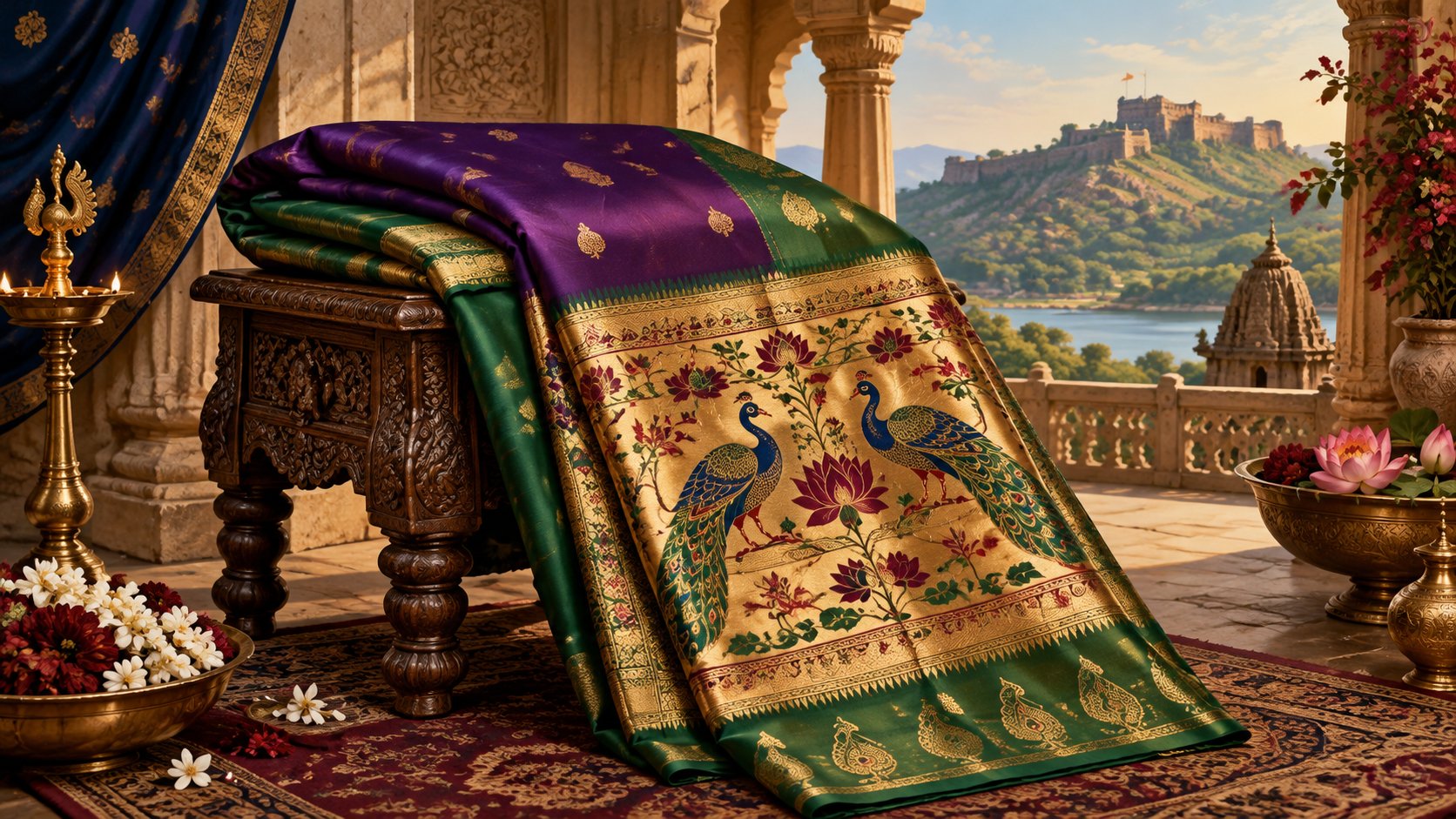
Few textiles are as instantly recognisable. A Paithani pallu, glowing with gold and filled with peacocks and flowers, is often the saree that a family brings out for its most important days.
A Saree Named After a Place
The Paithani takes its name from Paithan, a historic town on the Godavari in Maharashtra. Today the tradition is also strongly associated with Yeola and other weaving centres in the state.
"Paithani Saree & Fabrics" is a registered Geographical Indication, with its certificate dated 3 September 2010. [1] A separate application for "Paithan's Paithani" was merged into that registration. [2] As we discussed in earlier episodes, a GI connects a product's identity and reputation to its place of origin. [3]
Silk, Zari and Colour
A traditional Paithani is woven in silk with zari, the metallic thread that gives it its golden glow. What makes it special is how colour and gold come together. Rich purples, greens, magentas, yellows and deep reds are common, and many sarees show a shimmering, shot effect when the warp and weft are of different colours.
The borders and pallu are where the Paithani truly sings. In traditional work, the design areas are built up by the weaver colour by colour, by hand, which is why a richly worked pallu takes so much time and skill.
The Motifs of Paithani
Paithani design is filled with symbols drawn from nature and everyday life. Among the best known are:
- The peacock, perhaps the most loved Paithani motif.
- The lotus, a symbol of beauty and purity in Indian art.
- Parrots, flowers and creepers, which give the pallu a sense of movement.
Different weavers and families favour different combinations. The motif vocabulary keeps growing while staying rooted in the tradition.
A Saree of Family Memory
In many Maharashtrian homes, a Paithani is far more than clothing. It is worn at weddings and festivals, and is often kept carefully and passed from mother to daughter. Many stories about Paithani's royal patrons and early history are told with great pride. I share them as community narratives — important to the people who hold them — rather than as a single, settled timeline.
How to Appreciate a Paithani
When you look closely at a Paithani, notice:
- The pallu — how finely the motifs are formed and how cleanly the colours meet.
- The colour play — the way the body may shift in tone as it moves.
- The border — its zari work and how it frames the saree.
The GI registration is a reminder that the name "Paithani" belongs to its region and its weavers. [1]
Why Paithani Matters Today
The Paithani shows that bold colour and deep tradition can feel completely contemporary. Designers and wearers continue to find new ways to bring Paithani into modern wardrobes, without losing what makes it unique.
A Thread to the Next Episode
From Maharashtra, next Sunday we go north-west to Gujarat, to one of the most technically demanding textiles in the world — the double ikat Patola of Patan.
Threads of India is an editorial series. Kauseyam does not claim ownership of, or exclusive rights to, any tradition described here.
— Dr. Rajshree Verma Founder & Director, Vermaverse OPC Private Limited; Founder — Kauseyam
References
- [1] Intellectual Property India — Paithani Saree & Fabrics, GI Application No. 150 (registered; certificate dated 3 September 2010)
- [2] Intellectual Property India — Paithan's Paithani, GI Application No. 153 (merged with Application No. 150)
- World Intellectual Property Organization — Geographical Indications (what a GI protects)
Episode 4 · Paithani · Paithani saree · Maharashtra · Zari · Weaves of India
View Archive