Threads of India — Dr. Rajshree Verma Writes
Pochampally Ikat: Geometry Woven in Thread — Episode 6
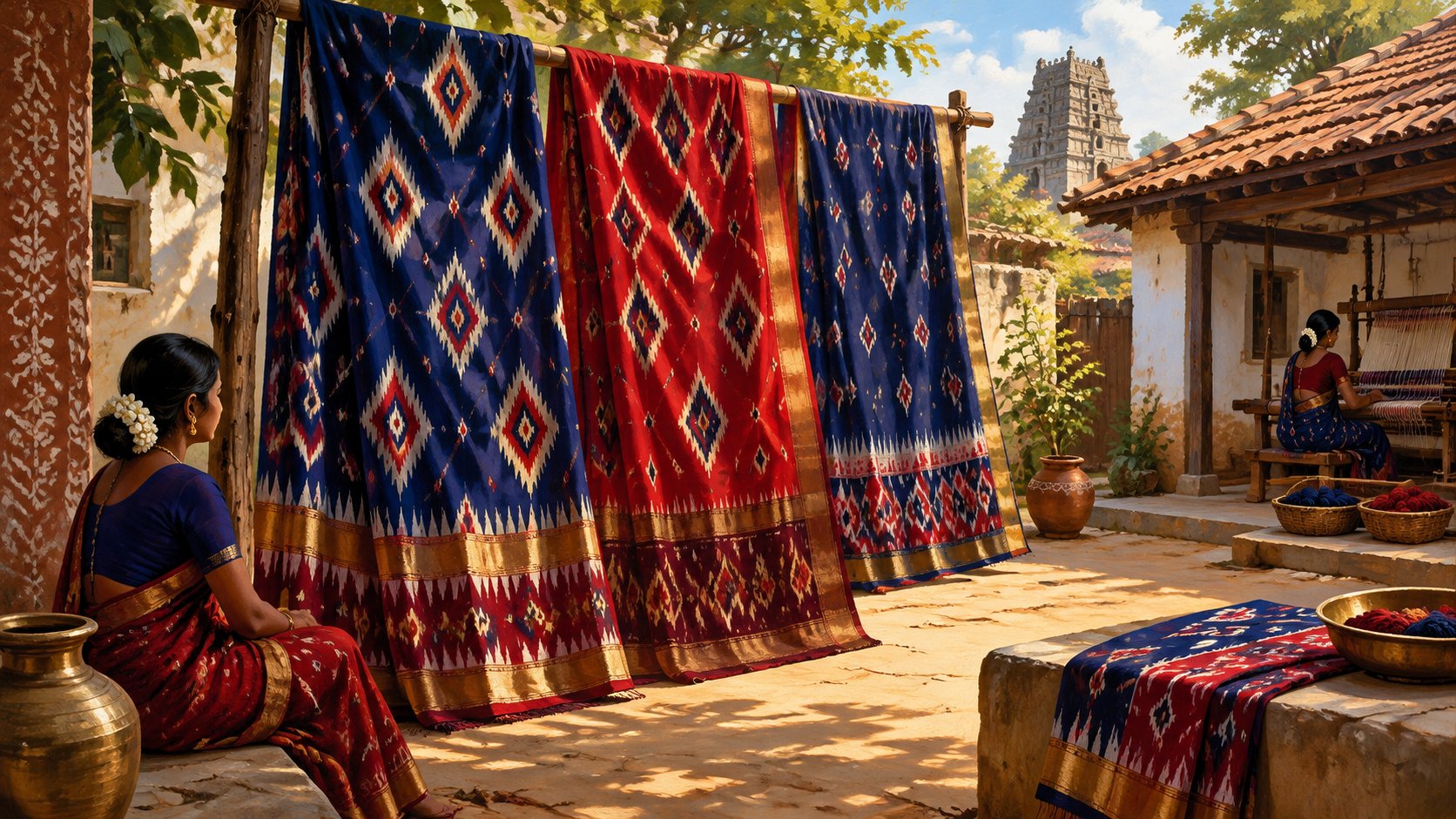
Episode 6 of Threads of India visits Pochampally in Telangana, known for ikat sarees and fabrics with bold geometric patterns dyed into the yarn before weaving.
Threads of India Spotlight | Episode 6
Sunday, 8 November 2026
Last week in Patan we learned the patience of double ikat. This week we stay with the art of dyeing thread before weaving, and travel south to Pochampally in Telangana.
Among India's Earliest GI Textiles
Pochampally Ikat holds a special place in India's Geographical Indication history. Its application, number 4, was filed on 15 December 2003, and the registration certificate is dated 31 December 2004. [1] The applicant was the Pochampally Handloom Weavers Co-operative Society, together with a weavers' manufacturers association. [1]
This reflects something important about Pochampally: it is a tradition sustained by organised weaving communities and cooperatives.
How Pochampally Ikat Is Made
As in all ikat, the pattern is created on the yarn before weaving. Sections of thread are tied tightly so that they resist the dye, then dyed, then re-tied for the next colour. When the prepared yarn is set on the loom and woven, the design appears.
Pochampally is known for both single and double ikat work, in silk and cotton. Compared with Patola, Pochampally often feels more graphic and contemporary, with bold repeating shapes. [2]
The Geometry of Pochampally
What many people love most about Pochampally is its geometry. Diamonds, zig-zags, chevrons and other repeating shapes create a sense of rhythm across the fabric. Because ikat edges are never perfectly sharp, the patterns have a soft, slightly feathered outline. That gentle blur is not a flaw — it is the signature of hand-dyed yarn.
More Than Sarees
Pochampally ikat is woven into sarees, dress materials, dupattas and home textiles. This range shows how a heritage technique can adapt to everyday use while keeping its identity.
The People Behind the Pattern
Weaving in Pochampally and the surrounding villages involves many hands — those who prepare the yarn, tie and dye it, set the loom and weave. Families and cooperatives keep this chain of skill alive. When we buy genuine Pochampally, we support that whole ecosystem.
How to Appreciate Pochampally Ikat
Look for:
- The feathered edge of each motif, the mark of resist-dyed yarn.
- Pattern rhythm — how the geometry repeats across the cloth.
- Colour — clear, balanced dyeing across the fabric.
The registered GI is a reminder to value cloth that genuinely comes from this region. [1]
Why Pochampally Matters Today
Pochampally proves that heritage can look strikingly modern. Its bold geometry sits comfortably in today's wardrobes and homes, and it carries a story of community enterprise that is just as relevant now.
A Thread to the Next Episode
Next Sunday we travel to India's north-east, to Assam, and to a silk known for its natural golden glow — Muga.
Threads of India is an editorial series. Kauseyam does not claim ownership of, or exclusive rights to, any tradition described here.
— Dr. Rajshree Verma Founder & Director, Vermaverse OPC Private Limited; Founder — Kauseyam
References
- [1] Intellectual Property India — Pochampally Ikat, GI Application No. 4 (registered; filed 15 December 2003; certificate dated 31 December 2004; area: Telangana)
- [2] Intellectual Property India — Patan Patola, GI Application No. 232 (double ikat, for comparison)
- World Intellectual Property Organization — Geographical Indications (what a GI protects)
Episode 6 · Pochampally Ikat · Ikat · Telangana · Handloom · Weaves of India
View Archive