
Threads of India — Dr. Rajshree Verma Writes
Muga Silk of Assam: The Golden Thread — Episode 7
Episode 7 of Threads of India travels to Assam to explore Muga silk, prized for its natural golden colour and its place in Assamese culture.
Threads of India Spotlight | Episode 7
Sunday, 15 November 2026
So far in this series we have seen silk dyed, brocaded and woven into intricate patterns. This week we meet a silk that is admired for a colour it already has — Muga, the golden silk of Assam.
A Silk Unlike the Others
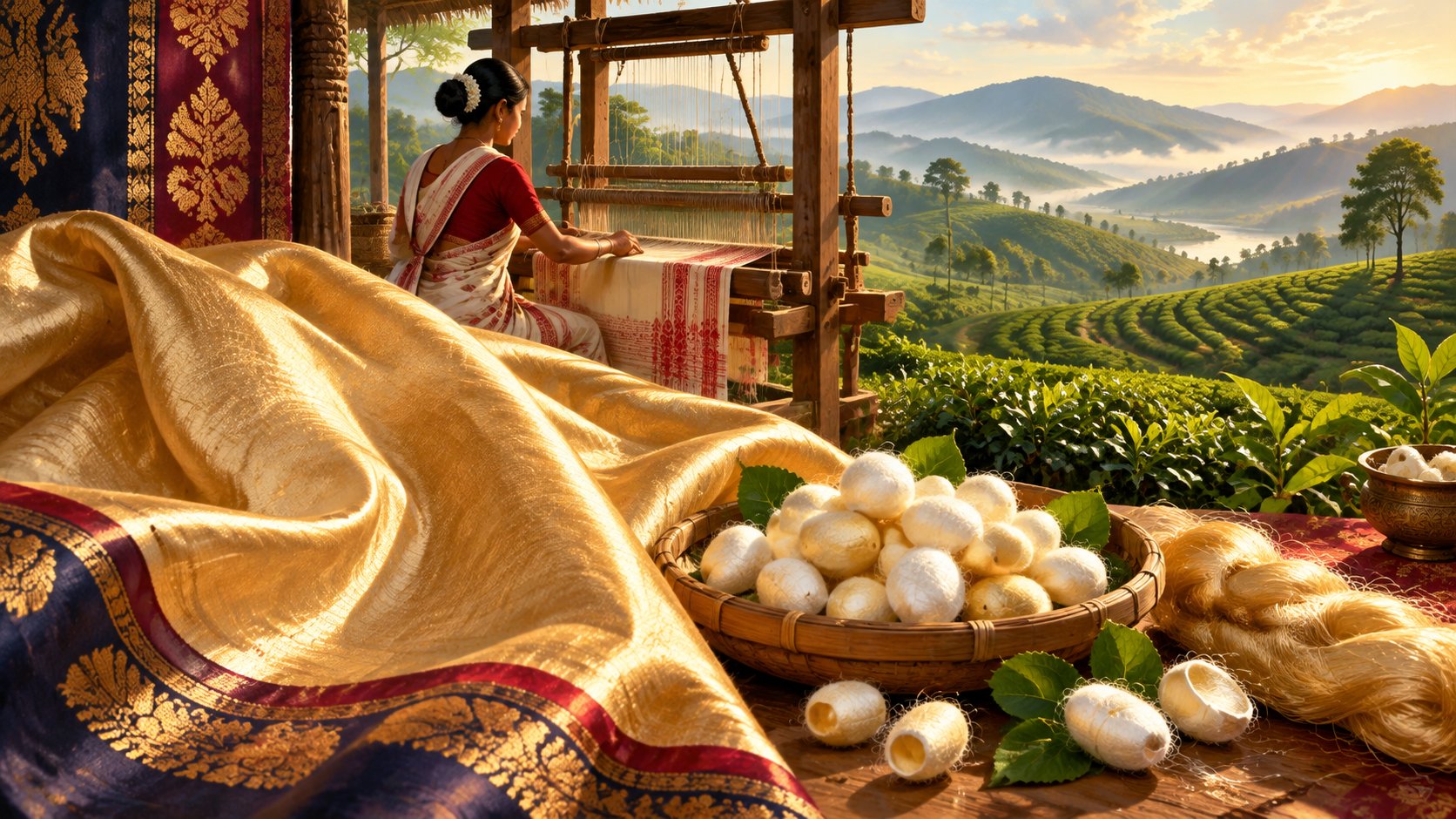
Most of us picture silk as white or cream before it is dyed. Muga is different. Its natural colour is a warm golden yellow, and it is prized for its lustre. This is why Muga is so often called "golden silk".
Muga belongs to the group known as wild or non-mulberry silks, which come from silkworms other than the common mulberry silkworm. India's Central Silk Board describes the country's different silk varieties, including Muga. [2]
Registered to Assam
"Muga Silk of Assam" is a registered Geographical Indication, with its certificate dated 13 July 2007. [1] The registration recognises that this silk's identity and reputation are tied to Assam. [3]
From Cocoon to Cloth
Producing Muga involves rearing silkworms, harvesting cocoons, reeling the thread and weaving. Each stage requires knowledge and care. Because Muga's colour is natural, weavers often let the golden ground speak for itself, adding woven motifs in contrasting threads.
Muga in Assamese Life
In Assam, Muga is deeply woven into cultural life. It is used in traditional garments such as the mekhela chador, worn on festive and important occasions. Weaving has long been a valued skill in many Assamese households, and the loom holds a cherished place in community memory.
As with every tradition in this series, many stories about Muga's royal history are told with pride. I share them as cultural narratives, while keeping our facts to what official sources confirm.
Caring for a Golden Silk
Muga is valued for its durability, and many families treasure Muga garments for years. Gentle care helps preserve its natural glow. Its lustre is often said to deepen with time — a quality owners cherish.
How to Appreciate Muga
Look for:
- Natural golden colour — a warm, even glow rather than a dyed yellow.
- Lustre — the way the fabric catches light.
- Woven motifs — how traditional designs sit on the golden ground.
Buying genuine Muga supports the rearers, reelers and weavers of Assam, and respects the GI that protects its name. [1]
Why Muga Matters Today
Muga reminds us that India's textile heritage is not only about technique but also about nature — about silks that come from particular landscapes. Protecting that link is part of protecting the tradition.
A Thread to the Next Episode
Next Sunday we return to Madhya Pradesh, to the banks of the Narmada, for the Maheshwari saree.
Threads of India is an editorial series. Kauseyam does not claim ownership of, or exclusive rights to, any tradition described here.
— Dr. Rajshree Verma Founder & Director, Vermaverse OPC Private Limited; Founder — Kauseyam
References
- [1] Intellectual Property India — Muga Silk of Assam, GI Application No. 55 (registered; certificate dated 13 July 2007)
- [2] Central Silk Board, Ministry of Textiles, Government of India — official information on India's silk varieties
- World Intellectual Property Organization — Geographical Indications (what a GI protects)
Episode 7 · Muga silk · Assam · Golden silk · Wild silk · Weaves of India
View Archive